Droply

Once upon a time, there was a kind and gentle girl who lived with her stepmother and two stepsisters. Her stepfamily was proud and often unkind. They gave her all the hardest chores: scrubbing the floors, washing the dishes, and sweeping the hearth. When her work was done, she liked to sit by the warm fireplace among the cinders, so her stepsisters called her Cinderella.
But Cinderella never grew bitter. She hummed while she worked, she was kind to everyone she met, and in the evenings she looked out of the window at the stars and made quiet wishes.
One day, a messenger arrived with exciting news. The king's son was holding a grand ball, and every young lady in the land was invited.
The stepsisters were thrilled. For days, they tried on dresses, curled their hair, and asked Cinderella's advice, because she had such good taste. Cinderella helped them patiently, even though she longed to go herself.
On the night of the ball, she watched their carriage roll away. Then she sat down by the fireplace, and a few tears fell into the ashes.
Suddenly, the room filled with a soft, silvery light. There stood a woman with a warm smile and a slender wand. "Don't cry, my dear," she said. "I am your fairy godmother. You wish to go to the ball, don't you?"
"Oh, yes," whispered Cinderella.
"Then bring me a pumpkin from the garden."
Cinderella brought the biggest pumpkin she could find. The godmother tapped it with her wand, and it grew and glowed and turned into a beautiful golden coach.
Next, she found six little mice in the mousetrap and turned them into six fine gray horses. A fat, whiskery rat became a jolly coachman, and six green lizards from behind the watering can became six footmen in shining uniforms.
"But my dress," said Cinderella, looking at her old apron.
With one more touch of the wand, her apron became a gown of silver and gold, sparkling with jewels. And on her feet appeared a pair of glass slippers, the most delicate in the world.
"Now go and enjoy yourself," said the godmother. "But remember: the magic lasts only until midnight. When the clock strikes twelve, everything will turn back as it was."
Cinderella promised, and off she went.
When she entered the ballroom, the music stopped for a moment. Everyone turned to look at the mysterious guest. The prince himself came to greet her, and he asked her to dance. He found her gentle, witty and kind, and they talked and laughed as if they had known each other for years. Cinderella even sat beside her stepsisters and shared oranges with them. They didn't recognize her at all.
The evening passed so quickly that Cinderella forgot the time. Suddenly, the great clock began to chime. One… two… three…
"Midnight!" she gasped. She thanked the prince and hurried away, running down the palace steps so fast that one glass slipper slipped off her foot. She didn't dare stop.
By the time she reached the garden gate, her coach was a pumpkin again, the horses were mice, and she was wearing her old apron. All that remained of the magic was the other glass slipper, still on her foot.
The next day, the prince announced that he would find the owner of the glass slipper. His messenger traveled from house to house, and every young lady tried it on. But it was far too small for everyone.
At last, the messenger came to Cinderella's house. Her stepsisters squeezed and pushed, but the slipper would not fit.
"May I try?" asked Cinderella softly.
The stepsisters laughed. But the messenger said, "Everyone may try." And the glass slipper slid onto Cinderella's foot as if it had been made of air.
Then she took the matching slipper out of her pocket. At that very moment, her fairy godmother appeared and, with a touch of her wand, dressed her once more in silver and gold.
The stepsisters were astonished. They realized how unkind they had been and asked for forgiveness. Cinderella, with her generous heart, hugged them and forgave them completely.
Cinderella and the prince were married, and they ruled the kingdom with kindness. And the little glass slippers were kept safely in a velvet box, reminders that goodness and patience shine brighter than any jewel.
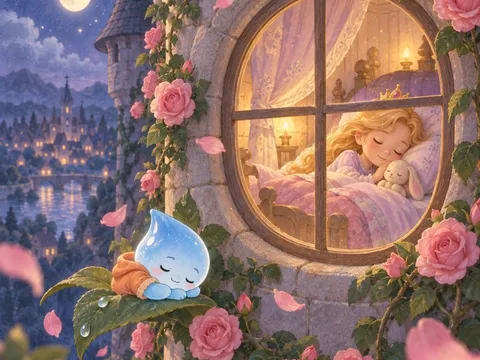
That night, in her quiet room at the palace, Cinderella looked out at the stars, the same stars she had wished on by the fireplace. She smiled, closed her eyes, and slept peacefully until morning.
The ball is over now. The music has faded. The clock has chimed, and there is nowhere you need to hurry. Close your eyes… and rest.
Good night.